


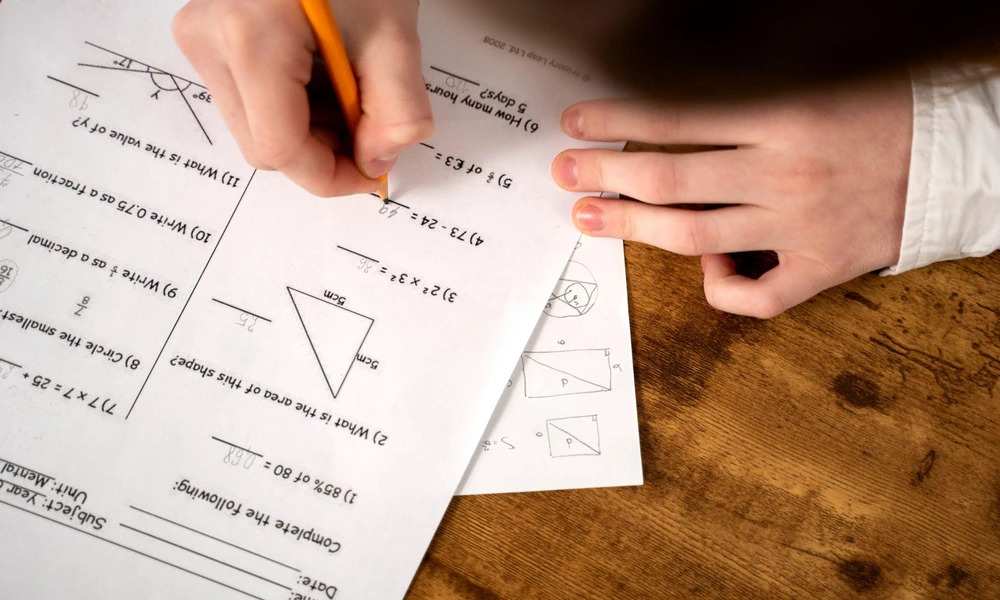
Parents usually notice A-Math difficulty around the point where a grade drops, which is often a term or two after the gap actually opened. The subject compounds tightly, with differentiation underpinning integration and both underpinning the applied questions that carry the most marks, so a weakness from Secondary 3 is considerably larger by the time prelims approach. The useful skill is recognising the earlier signals, which appear in how a child works rather than in what they score. Five indicators suggest that A-Math tuition in Singapore is worth arranging now rather than after a disappointing prelim.
1. Homework Takes Noticeably Longer Than It Used To
A child who once completed A-Math homework in an hour and now spends two and a half on the same volume is struggling with something specific rather than simply facing harder content.
Watch where the extra time goes. Working through genuinely difficult problems is productive. Staring at a question with no starting point, or repeatedly hunting for a similar worked example to copy the structure from, indicates the child cannot identify what a question is asking, which is the central skill the subject assesses.
2. They Can Perform a Technique but Cannot Say When to Use It
Ask your child to differentiate something and they may well do it correctly. Ask why differentiation applies to a particular applied problem and the answer frequently disappears.
A-Math questions rarely announce their method. Students who learned each technique on labelled exercises and never connected it to the situations it solves hit a wall when questions stop being labelled, and this gap is invisible in topic tests while being obvious in mixed papers.
3. The Same Topic Keeps Appearing in the Lost Marks
Look across two or three recent papers and check whether errors cluster. Logarithms, trigonometric identities, and the application side of calculus are common sticking points.
A specific recurring gap is good news in one sense, since it is addressable in a handful of focused sessions. Providers of Additional Math tuition in Singapore given three marked papers can usually identify the pattern in a single sitting, which is considerably faster than a student working through the full syllabus again hoping to catch whatever is wrong.
4. Marks Are Lost on Method Even When the Answer Is Right
When a child reaches a correct answer but loses method marks, or cannot reproduce how they got there when asked a day later, the reasoning is unstable even though the result looks fine.
This matters because the examination awards marks for working, and because a method a child cannot explain will not survive a harder version of the same question.
5. They Have Stopped Asking Questions About the Subject
The least measurable indicator and often the earliest. A student who used to mention something they found interesting or confusing, and now says nothing about A-Math at all, has frequently concluded they are not good at it.
That belief does more damage across a year than any content gap, because it stops them attempting unfamiliar questions, which is precisely the practice they need most.
Testing the Gap at Home Before Prelims
A useful check takes an afternoon. Take a question your child answered correctly, change the context while keeping the underlying mathematics identical, and watch what happens.
Students who adapt have understanding and may need practice. Students who need familiar wording have a gap, and knowing which situation you are in while there is still time before prelims makes the difference between a manageable intervention and an urgent one in the final weeks.
Contact The Classroom to review your child’s recent A-Math papers and identify where the marks are actually being lost.